
She/Her/Hers
Lesbian
|
|
EMILY PRATT SLATIN | About | Press Kit | Notebook | Music Playlist | She/Her/Hers Lesbian |
Retired Career Fire and EMS Lieutenant-Specialist, Writer, and Master Photographer, living in Vermont.
January 11, 2026—Middletown Springs, Vermont (Home)
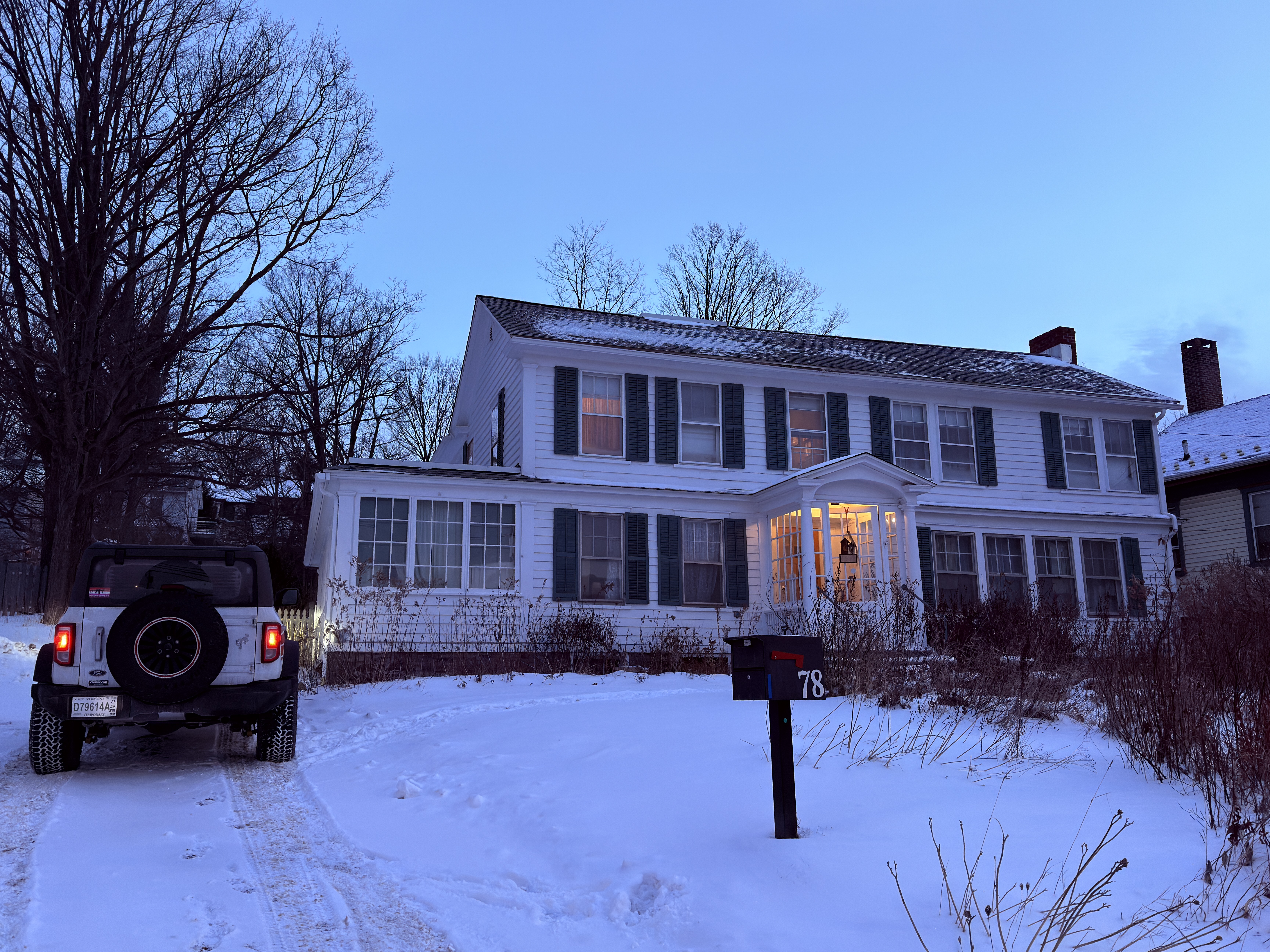
I am now forced to sell my mother's house in Upstate New York.1 It is an obvious decision, and yet that is the sentence I keep circling without wanting to land on it.
Amelia and I took the long drive to the house where I grew up in the first week of January 2026. Winter had settled in the way it does up there—heavy, unapologetic, bitter cold, and not interested in nostalgia or sentiment. When we walked in, the house was cold in that particular way that tells you something mechanical has already failed and has been failing for a while. Of course, yet again, the furnace was not running.
It did not take long to figure out why. No oil had been delivered. The tank was empty. My friend Angie—the one who had been staying there on and off and was supposed to be keeping an eye on the place while probate dragged on—had somehow neglected to check the level. We have been lifelong friends and were a couple for nearly two decades, so I do not think it was malicious. I think it was human. That does not make the cold any less real.
I stood there and did the thing I always do. I called the local heating company and asked for help. I did not explain the backstory. I did not explain the weight of the house, or whose it had been, or why it mattered. I just asked for oil. I called the same company my parents had used for nearly thirty years. The person who answered the phone was someone I knew from childhood. He said he was sorry to hear of my mom's passing, said that she was truly great, and told me not to worry—he would send someone over shortly.
While we waited for the truck to arrive, Amelia said—quietly, carefully—that I need to start thinking about selling the house. That caring for it has become a burden. The same burden I carried for decades until March of last year, when I sold the family business and no longer had to maintain the apartment building in New York City that I had been born into.
That the long drive, the nights spent there twice a month, the constant vigilance—all of it will eventually start to take time and energy away from the projects I have here at the farm. It is already starting to pull me away from the life in Vermont I am actively building with Amelia.
As much as I want to preserve my mom's house, she is right. I know she is right. I have known it for a while, actually. Though my original plan was to conserve it historically and keep it as a time capsule I could visit whenever I wanted, following probate, plans to save my mom's house became hope, followed by the realization that I was using denial as a means to avoid selling the place. Sometimes in life, even correct decisions come with hesitation, especially when it comes to selling one's childhood home.
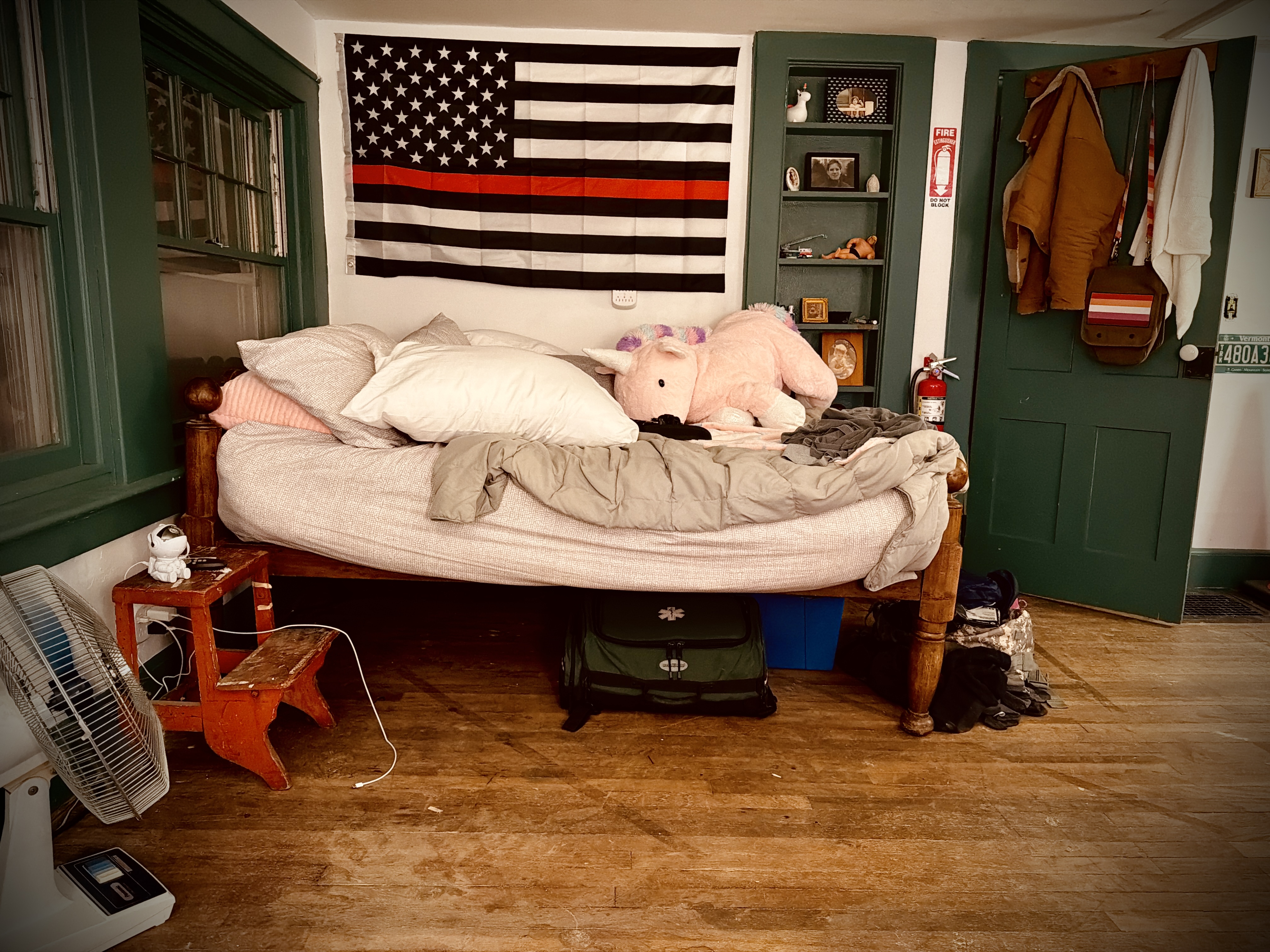
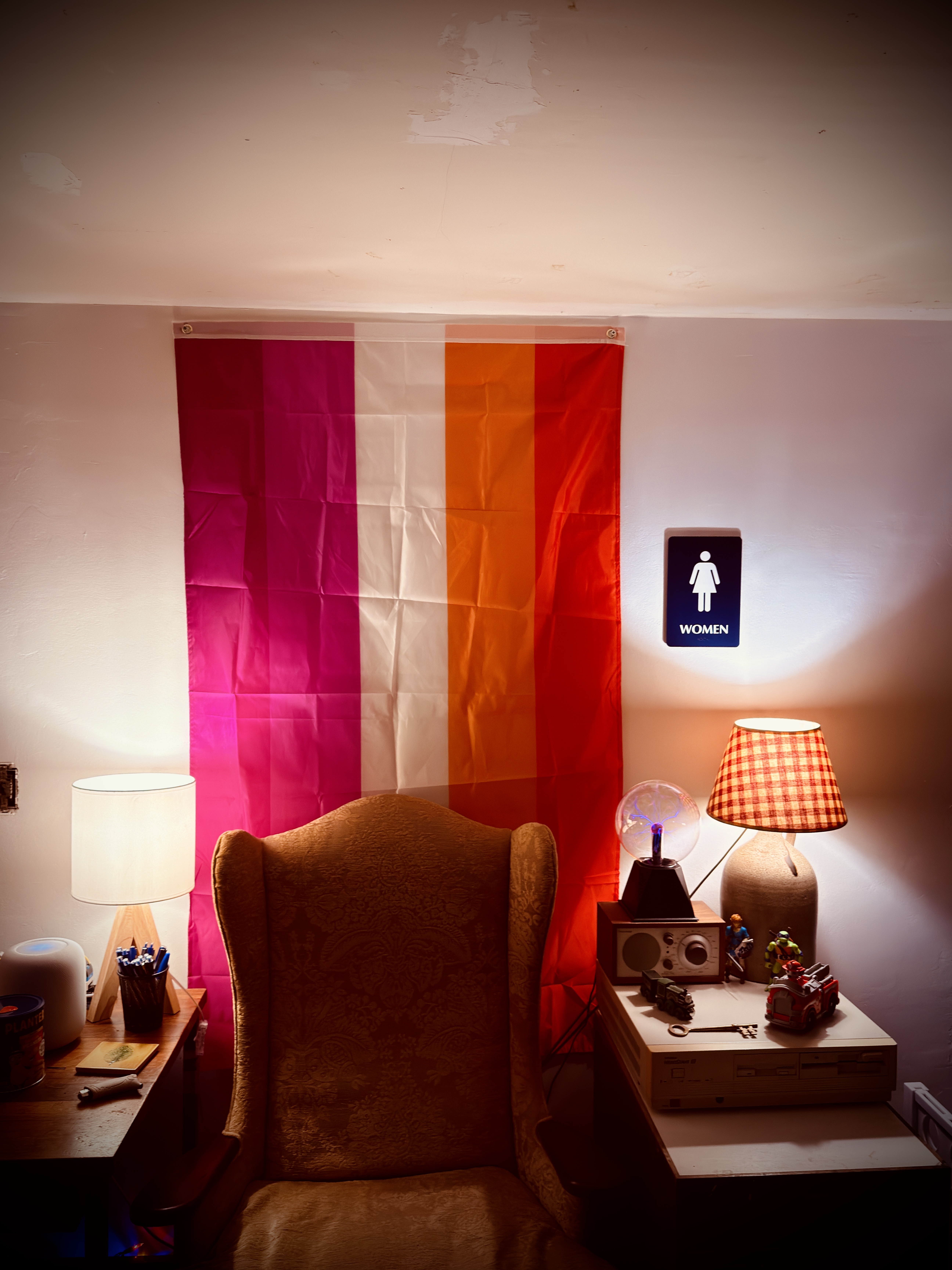
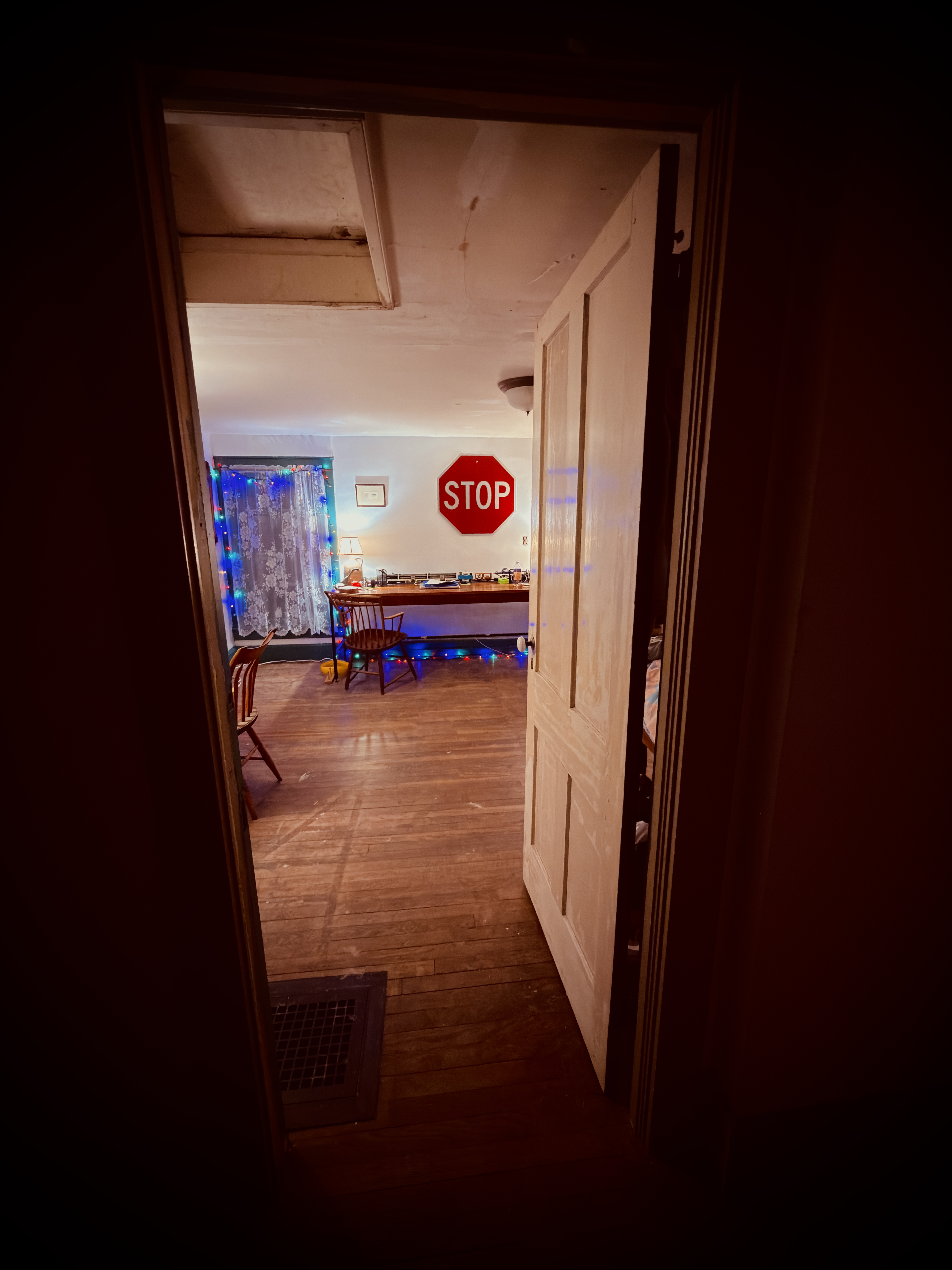
I went back into my childhood bedroom and sat in my favorite chair, the one my mother had professionally reupholstered in an ugly mustard fabric that I hated at first and somehow grew to love. I did not bother to take off my hiking boots or my brown Carhartt jacket. I sat there fully dressed, feeling the same cold settle into the room as the night my father first kicked me out of the house at sixteen. Different stage of life. Same kind of cold.
I realized that sometimes an entire life path hinges on a single decision—a single moment where everything quietly tips and life moves forward down one direction instead of another, without ceremony, without permission, and without any real chance of turning back.

My parents moved me here from Greenwich Village in New York City2 forty years ago—not because of a job, or a dream, or some pastoral longing for space and quiet, but because a pediatrician asked me a question so basic it barely registered as a choice… Was I a boy or a girl?
I said girl—because of course I did, because to me it was simply obvious and free of conflict. My father heard something different in that answer. He heard defiance, or threat, or failure as a father, and his solution was erasure. He uprooted my mother and me and planted us in the small upstate village of Stamford, New York, where he thought isolation might finish what force could not—where he could try, methodically and stubbornly, to raise me as a boy. He tried and failed.
This is the house where my father told everyone I was a boy—despite what my birth certificate clearly said, despite what I had already said for myself. On paper, in school records, and in places where state-funded authority liked things neat and unquestioned.
At home, in quieter rooms, in the spaces that mattered, I was Emily—to my mother, and to the very small handful of friends who were close enough to be trusted with the truth of how I was born. Those were the only people who actually knew me. Everyone else knew a version that had been constructed for their comfort, their certainty, and their need for order.
My best friend was a girl who lived next door, and we sat next to each other in class starting in third grade. She knew my life story up to that point in full, but none of the adults in our lives knew. I learned early how to live split down a fault line—one name for survival, one name for breathing—and I understood, even then, which one was real.
At twelve, my father paid a sketchy doctor to put me on testosterone. It did not do what he wanted it to do. It did not change who I was. The only real effect was that it slowed down what my body would have done on its own anyway—my natural, eventual female development.
My father then forced me into joining the local Boy Scouts chapter. I won the Pinewood Derby one year. Dad said it was a requirement for me to participate. I told him that if I was going to participate in the event, I wanted to participate in making the car like everyone else.
Instead of saying yes, my father said that I could simply watch him do it and that way I would learn. He told me to watch as we stood in the basement of my childhood home while he cut the car out of the wooden block, shaping it with a hand saw before drilling several large holes to hollow out the body.
I then watched my father pour molten lead into holes I had drilled into the wooden block in our kitchen. At the time, I did not fully understand what was happening. I only understood that something was being done to me—quietly—and that it was meant to push me in a direction of lies and self-erasure I was never going to take.
Dad then painted the car bright red with model paint and gave it several coats of gloss. My participation was limited to the decorations of the car itself, and according to my father, they could not be the girly bullshit I usually created. He handed me a sheet of adhesive-backed paper and told me to make the decorations out of it. I made Ghostbusters decorations.
The car my father had created and I had merely decorated won, naturally, because he had engineered it to do so. At the end of the evening, I was told to stand between two other boys who had won second and third place respectively. I held up the car and stood stoic through the flashbulbs of several film cameras.
I went home and put the car in my dresser drawer, along with the gold-plated medal suspended from a blue and gold nylon ribbon, then threw my scout uniform in the laundry pile. Winning first place and beating out boys was a topic of discussion among my friends for a very short time afterward. After that, I almost never thought about it and never had a reason to bring it up in conversation. It simply existed, rent free, as an ever-living ghost of what my father dreamed would have been my destiny.
Sometimes nostalgia is unrequited love with nowhere left to go. And in life, whatever path we choose to walk, inevitably, in the end, we walk alone.
 |
 |
 |
 |
 |
1 - 78 Main Street, Stamford, New York 12167
2 - 11 Bank Street, New York, New York 10014
|
Copyright © 1998-2026 Emily Pratt Slatin. All Rights Reserved. About | Archives | Biography | EMD Codes | Notebook | Press Kit | Pronouns.page | RSS Feed | Sitemap | YouTube Made with grit in Middletown Springs, Vermont. |