
She/Her/Hers
Lesbian
|
|
EMILY PRATT SLATIN | About | Press Kit | Notebook | Music Playlist | She/Her/Hers Lesbian |
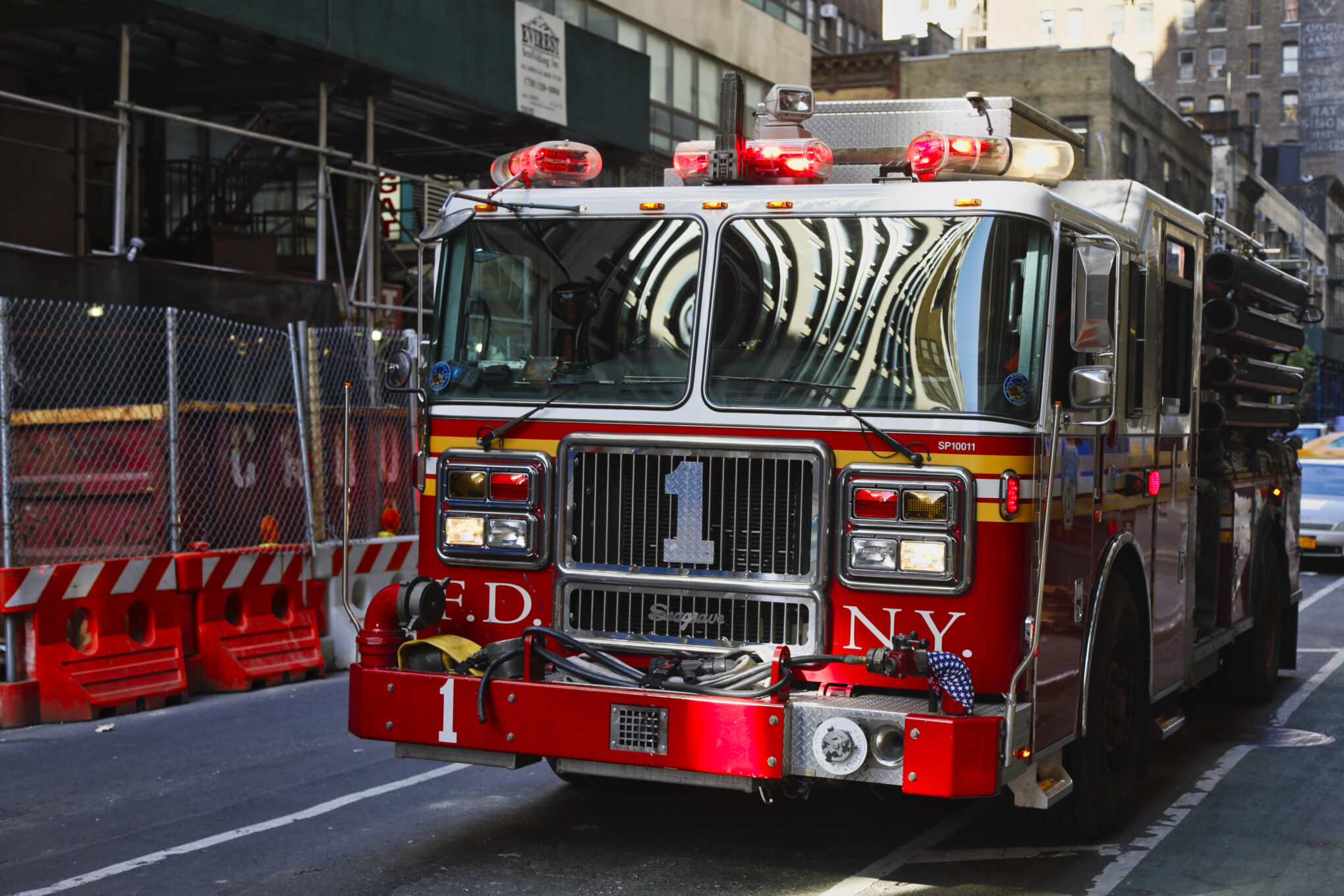
Retired Career Fire and EMS Lieutenant-Specialist, Writer, and Master Photographer, living in Vermont.
September 10, 2026—Middletown Springs, Vermont (Home)
As a child, I worried I'd die before I learned to speak. Dad had threatened to send me back to the psych ward if I kept "pretending to be a girl," and for a while, I was terrified he'd find my diary.
I was molested for the first time shortly before we moved to Stamford. I stopped speaking for almost an entire year. I started writing instead. Dad accused me of being deaf. Soon enough, he accused me of being mentally retarded. I already knew how to speak. Dad simply wasn't listening. And that was the time that I promised I would never write about the love I received from my family because it did not exist.
My father's best friend was Arthur Sterling Covert, though to us he was Arturo. The reason Dad loved him was probably the same reason I did. I was the child he never had, despite the inconvenient fact that he had two children of his own. I knew his son, Patrick, but never met his daughter, though Arturo always spoke highly of her.
Some of the best days of my adolescence were spent with free rein of Arturo's property, where I was allowed to build forts and chase whatever adventure I had invented that afternoon, provided none of it remained on his lawn when I left. His lawn was something he took seriously.
In the 1980s, Arturo owned a plug-in lawnmower with a twenty-five-foot orange extension cord, and apparently that was all that was required to maintain his back yard. We would often walk from Front Street to Riverfront Park until one day Dad decided my risk of PCB exposure was too great to permit even a once-a-month visit on a Sunday afternoon. That was the end of Riverfront Park for me. I accepted this assessment with the unquestioning confidence a child places in her father's superior understanding of such things, then went back to Arturo's house a block away and played unsupervised in the dirt.
Years later, he reluctantly handed ownership of his house at 112 Front Street in Schenectady over to Patrick. Somewhere along the way there was an email exchange between Arturo and Dad that lasted the better part of a week, devoted almost entirely to joking about the refurbishment of the Lawrence statue out front—followed by a one or two sentence update about something happening at Arthur's Market, our collective favorite.
There are people from childhood I remember because something happened around them. Arturo was different. I remember him because he gave me somewhere to go, enough room to disappear into whatever world I was building. Dad gifted me my very first camera, which was a Canon AE-1 with a 50mm lens. Arturo was the one who taught me how to use it.
I drove to Queensbury to have dinner with Maddie and catch up on all that has happened since we saw each other last. Inevitably, more things actually happen than can possibly make the list, at least in my life.
Maddie asked a lot of questions about my life. With the twenty-fifth anniversary of September 11 tomorrow, Maddie asked what it was like working in NYC in June the following year. I said it was a period in my life that feels almost inaccessible to my memory. I remember going to work, brief periods of being at work, my coworkers, and little to nothing else besides a never ending sea of faces.
Perhaps it's just as well.
I did my best to tell her what life was like before she was born—even from my perspective, the way I described life when I was her age seemed incomprehensible. The world changed when I was in my twenties, and not only did the world change, but my entire outlook on life did as well.
I talked about Allegra, and how I had been in love for the very first time in the summer of 1996. I was sixteen. Now I'm forty-seven and still don't know where all the time went. She commented that she's turning twenty-five next week and that her life is now one quarter over. I'm going to be turning fifty soon, and still feel lost sometimes.
I told her that I wasn't scared to die. I just don't want to go before my time, or before I know for certain that she and Makayla are going to be okay without me. They reassure me that they will be each and every time the topic surfaces, and I have my doubts but smile just the same. If anything were to happen to either of them, or Amelia, I don't think I would ever be able to fully recover from the loss.
There are some friendships in life that feel inevitable from the start. The best friendships always felt like errant heat from a star—ever-present and endearing, yet never something that needed tending or worrying over.
I have met extraordinary people in extraordinarily ordinary places. I met Amelia on Twitter in 2020, and I met Maddie through our common interest in urban exploring.
The older I become, the more I admire people who are difficult to offend. Not because they lack convictions. Because they possess perspective. Perspective cannot be purchased. It must be survived.
I'm not one who is easily offended. Maddie said, "I've come to notice that you never ever ask for help."
I immediately bit the right corner of my bottom lip, and nodded. I stared at a random spot on the table between us, and took a deep breath. Silence is rarely empty. Most people simply lack the patience to hear what occupies it. I didn't need to say anything—I suspect she knew the answer already.
And so I simply said that asking for help was seen as a sign of weakness and that the same mentality extended throughout my career. Courage is frequently misidentified as fearlessness. In my experience, courage is well managed fear under competent supervision.
I don't think most people understand that an emergency responder can go to work, perform the most heroic act of her life, do absolutely everything right, save someone who otherwise would have died, and still go home afterward completely broken by what it took to do it.
Emergency work is rarely heroic in the clean way people prefer to imagine it. It is sweat, exhaustion, damaged clothing, unpleasant smells, incomplete information, and the stubborn requirement that someone continue thinking while everyone else is frightened. Emergency services taught me that professionalism and absurdity are not opposites. A person can make a competent decision while covered in mud, blood, rainwater, and whatever unidentifiable substance has attached itself to the uniform. The public only remembers the flashing lights and the commotion.
I said that I was there one or two days a week while I was working for a contracted private ambulance company. While I wasn't directly involved at ground zero, I was instead tasked with those recovering from the disaster. The media overwhelmingly focused on those lost, while countless people faced lifelong disabilities. I still remember driving the ambulance through New York and seeing papers blowing through the streets.
Before Amelia left for her road trip back to Buffalo, I told her that I have decided to dedicate the rest of my life to my writing, my photography, and above all else, my friends.
When it's my time, I hope that I'm remembered for my kindness and intelligence.
|
Copyright © 1998-2026 Emily Pratt Slatin. All Rights Reserved. About | Archives | Biography | EMD Codes | Notebook | Press Kit | Pronouns.page | RSS Feed | Sitemap | YouTube Made with grit in Middletown Springs, Vermont. |