
She/Her/Hers
Lesbian
|
|
EMILY PRATT SLATIN | About | Press Kit | Notebook | Music Playlist | She/Her/Hers Lesbian |
Retired Career Fire and EMS Lieutenant-Specialist, Writer, and Master Photographer, living in Vermont.
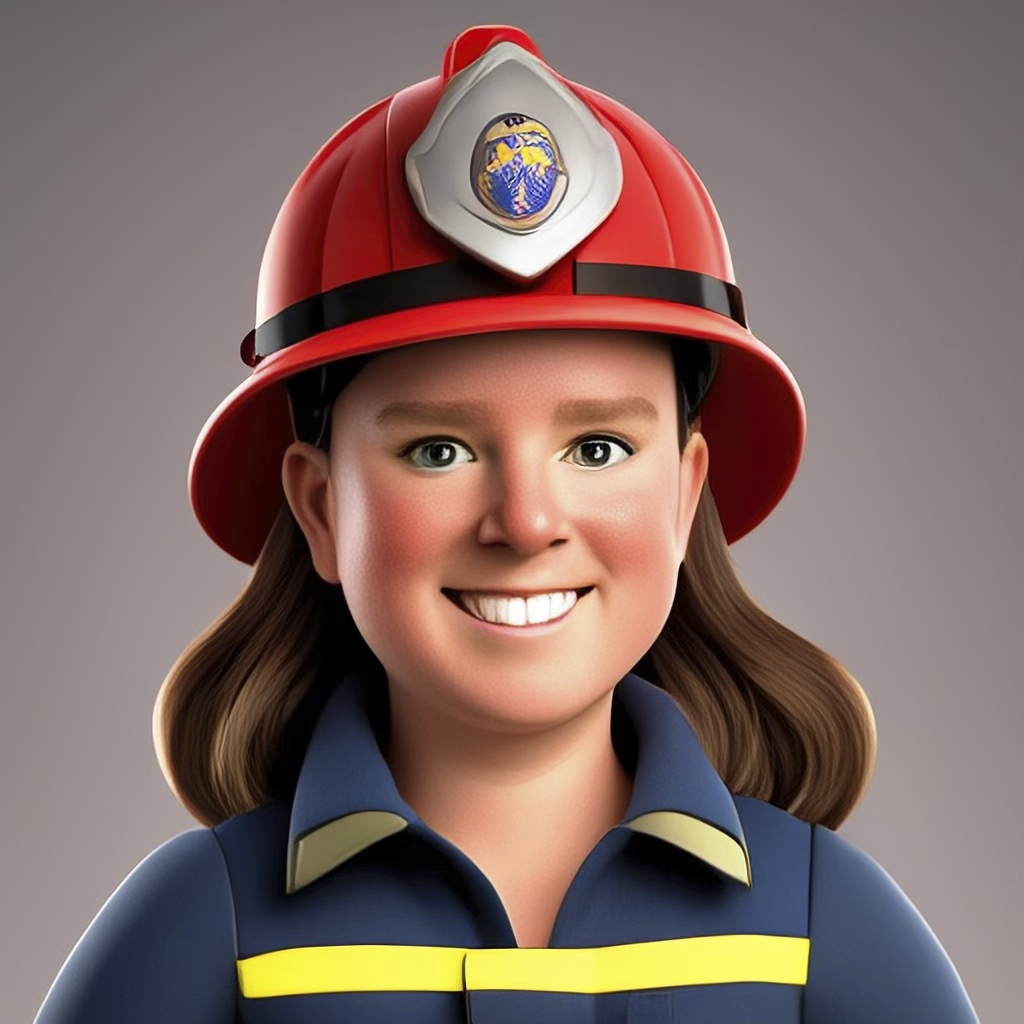
Emily Pratt Slatin is an American writer, master photographer, former paramedic, and former Firefighter Lieutenant-Specialist whose life and work are shaped by intellect, service, precision, survival, identity, and an unyielding commitment to truth. Born in New York City on July 20, 1979, and raised in New York and now based in Vermont, Emily has lived across worlds that rarely understand one another: emergency services and literary art, trauma and beauty, disciplined command and private vulnerability, clinical acuity and creative expression. Her story is not one of a single profession, identity, or achievement, but of a woman who has continually refused reduction. She is the daughter of Anne Pratt Slatin and Harvey Lester Slatin.
Emily is a multi-published writer whose voice reflects rigor, emotional intelligence, fierce observation, and a deep respect for language. She writes with the eye of someone who has seen what most people are spared, and with the mind of someone who understands that words are not decoration; they are architecture, record, witness, and sometimes rescue. Her work is informed by lived experience, high intelligence, moral clarity, and an enduring insistence that language should be accurate enough to honor reality. She appreciates a well-placed em dash, believes in the Oxford comma, and values prose that carries both force and grace without sacrificing either.
As a master photographer, Emily brings the same intensity of attention to images that she brings to language. Photography, for her, is not merely visual composition; it is perception made visible. Her background as both an artist and a first responder gives her a rare ability to notice what is often missed: tension in posture, light against damage, beauty inside aftermath, and the quiet human truths that exist between obvious moments. Her photography reflects a disciplined eye, a skilled hand, and a profound understanding that images can preserve what memory cannot always hold safely.
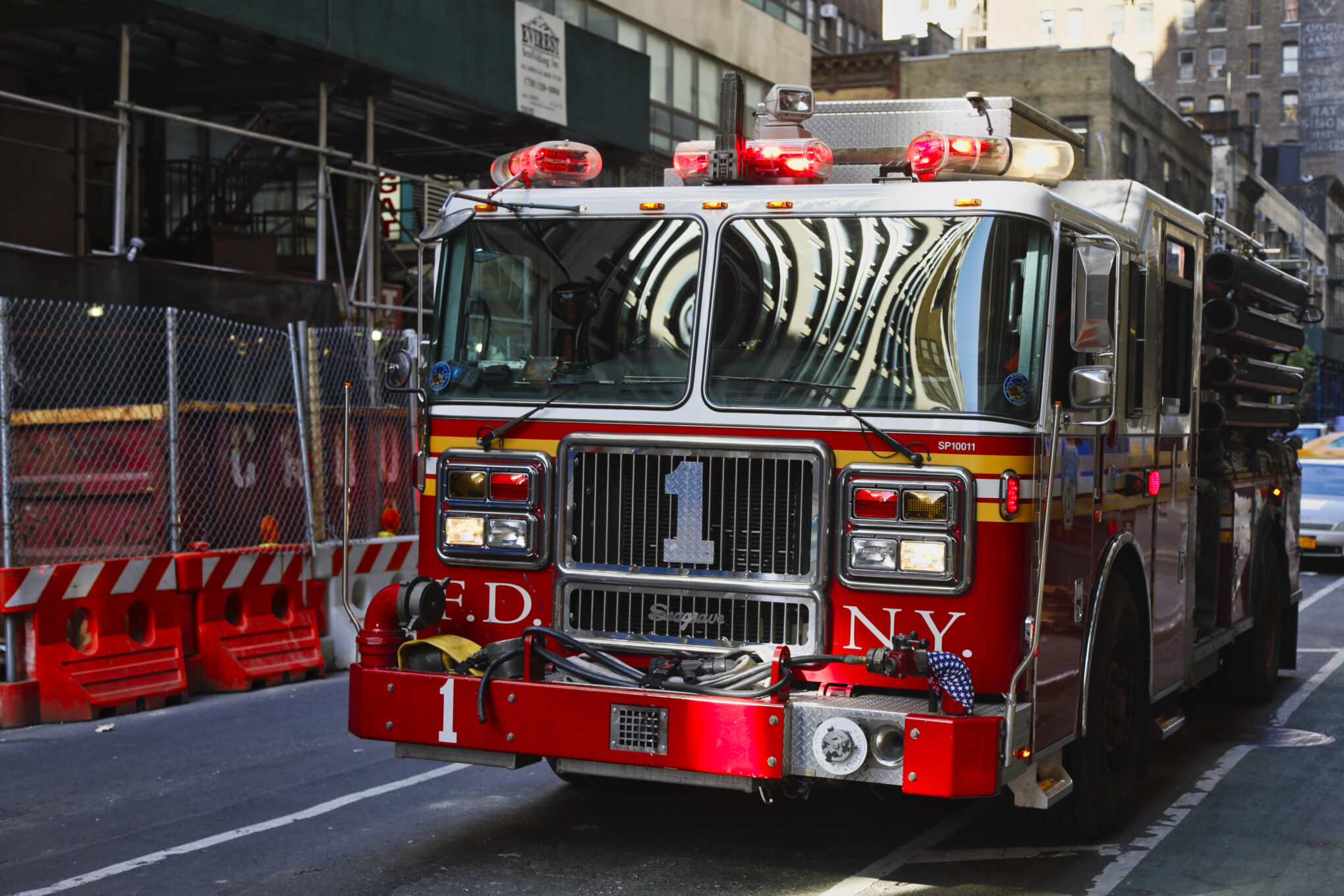
Before and alongside her creative life, Emily served in emergency services as a Paramedic and Firefighter Lieutenant-Specialist. That work required courage, command presence, physical and emotional endurance, technical skill, and the ability to make consequential decisions under pressure. As a paramedic, she entered some of the most critical and intimate moments of other people's lives. As a firefighter and lieutenant-specialist, she carried responsibility not only for emergency response, but for leadership, safety, judgment, and action when hesitation could cost lives. This part of her life is central to understanding her. Emily is not someone who merely thinks about crisis from a distance; she has lived inside it, responded to it, managed it, and survived its aftermath.
Emily is a cisgender woman, an intersex person, a lesbian, and an autistic woman. She uses she/her/hers pronouns. These identities are not side notes or abstractions; they are part of the reality of her body, her perception, her history, her social experience, and her understanding of the world. Her intersex identity matters because it speaks to a life lived beyond simplistic assumptions about sex, biology, womanhood, and embodiment. Her autism matters because it is part of how she senses, processes, notices, analyzes, creates, protects herself, and connects. Her lesbian identity matters because it is part of her love, her community, her truth, and her place in a world that has too often demanded explanation from people simply for existing honestly.
Emily's life has been shaped by complexity, and she does not ask that complexity be made palatable. She is a woman of formidable intelligence, with a well-documented IQ of 178, but her intelligence is not merely numerical. It is analytic, linguistic, visual, ethical, and experiential. She is capable of high-level pattern recognition, precise observation, and incisive reasoning, but she is also someone who understands that intelligence without compassion is incomplete, and that expertise without humility can become dangerous. She has spent her life in proximity to both art and consequence, and that has made her unusually difficult to fool, flatten, or dismiss.
She married Amelia Phoenix Desertsong at her Vermont farm in Middletown Springs, Vermont, on May 24, 2021. Amelia, a transgender woman from Brockton, Massachusetts, and fellow autistic, became not only her wife, but also her closest friend and equal counterpart in life. Together, they built a relationship shaped by loyalty, survival, humor, late-night conversations, and the rare kind of understanding that comes from two people who have truly seen one another without pretense. Their lesbian relationship is open, deeply rooted in friendship, and grounded in honesty, autonomy, resilience, and genuine companionship. Emily considers Madeline Grace O'Malley to be her best friend, besides Amelia.
Her personality is marked by intensity, wit, discernment, loyalty, and a refusal to accept careless thinking. Emily values accuracy, memory, justice, and language used with intent. She is sharp, often funny, deeply perceptive, and allergic to euphemism when clarity is required. She has little patience for empty performance, social pretense, or polished nonsense dressed up as wisdom. She is drawn to honesty, competence, nuance, and people who understand that truth can be both devastating and liberating. She is also a person of feeling, though not always in ways others know how to read. Her care is often practical, exacting, and fierce.
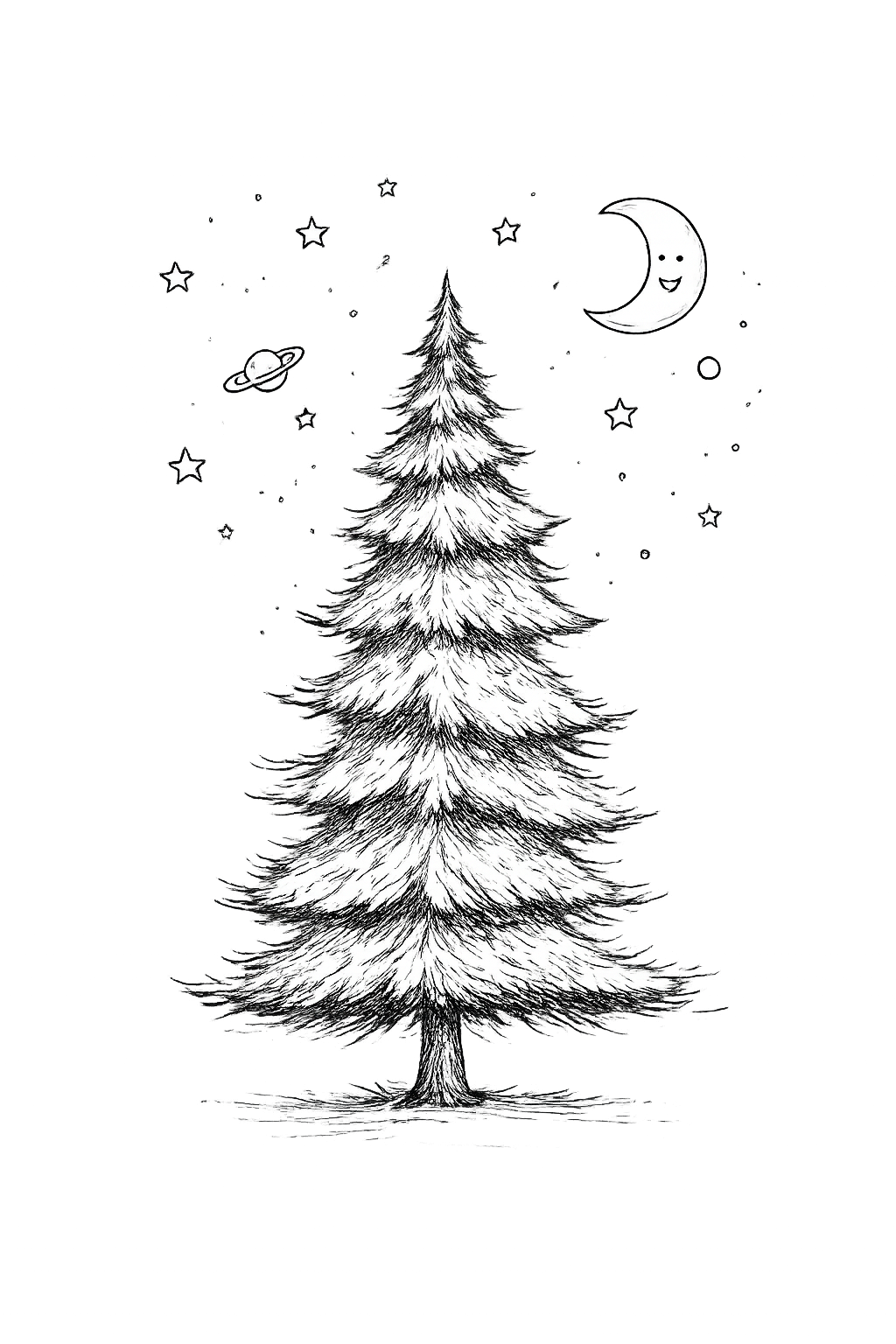
Emily's illustration style is as recognizable and personal as her prose. Working primarily in monochrome with a field-note precision influenced by industrial diagrams, handwritten annotation systems, and observational sketching, she creates images that feel simultaneously technical, intimate, and emotionally alive. Her work is defined by asymmetry, intentional drift, visible construction lines, and compositions that prioritize process over polish. Pine trees appear frequently in her drawings as symbols of endurance, identity, memory, and survival, built through layered downward gestures and uneven structures that mirror natural growth rather than geometric perfection.
The night sky is another recurring language within her work: hollow stars scattered irregularly across open space, a single observer crescent moon quietly watching from the margins, Saturn rendered with a single continuous stroke, and "god" represented simply as a small circle among the stars. These celestial elements function less as decoration than as silent witnesses inside the emotional architecture of the image. Emily's illustrations reject artificial symmetry and sanitized perfection in favor of something more honest — diagrams of thought, survival, perception, and memory rendered through the hand of a woman who notices everything.
As a writer, Emily's style is distinctive: intelligent, emotionally charged without being sentimental, exact without being sterile, and personal without surrendering authority. Her relationship to language is both aesthetic and ethical. She cares about punctuation because punctuation controls breath, timing, meaning, and force. She loves the Oxford comma not as a trivial preference, but as part of a broader respect for clarity. She appreciates the em dash because it can hold interruption, emphasis, fracture, and continuation in a single mark. These preferences say something larger about her: Emily believes the small choices matter because they shape the larger truth.
Emily's relationship to systems, infrastructure, mechanics, and self-sufficiency is not incidental to her identity; it is one of the clearest expressions of how her mind works. Living in rural Vermont, she maintains and repairs nearly every aspect of her environment herself, including electrical systems, plumbing, welding, fabrication, networking infrastructure, server architecture, and mechanical equipment. Emily approaches infrastructure with the same disciplined intelligence she brings to language and art. To her, a server rack, a tractor, an electrical panel, a camera, and a sentence are all variations of the same underlying principle: systems must function honestly under real-world conditions. Her self-sufficiency is not performance or nostalgia; it is a deeply held ethical and practical belief that understanding how things work is part of understanding how to live responsibly within the world.
Her life in Vermont and her New York upbringing both inform her sense of place. New York gave her origin, grit, history, and an early understanding of scale, pressure, and human variety. Vermont offers a different kind of terrain: quieter, colder, more rural, and often more revealing. Between those geographies, Emily carries both edge and stillness. She belongs to neither stereotype fully, and that, too, is fitting. Her life has never been easy to categorize.
Emily's work and identity should be understood together, not because every piece of art must be biographical, but because her life has given her a rare vantage point. She has been a responder, a witness, a leader, a patient observer, a survivor, a maker, and a woman whose body and mind exist outside the assumptions many systems were built around. She knows what it means to be necessary in an emergency and misunderstood in ordinary life. She knows the difference between being seen and being looked at. She knows how language can harm, how documentation can save, how institutions can fail, and how beauty can persist even when no one has arranged the scene.
|
Copyright © 1998-2026 Emily Pratt Slatin. All Rights Reserved. About | Archives | Biography | EMD Codes | Notebook | Press Kit | Pronouns.page | RSS Feed | Sitemap | YouTube Made with grit in Middletown Springs, Vermont. |