
She/Her/Hers
Lesbian
|
|
EMILY PRATT SLATIN | About | Press Kit | Notebook | Music Playlist | She/Her/Hers Lesbian |
Retired Career Fire and EMS Lieutenant-Specialist, Writer, and Master Photographer, living in Vermont.
February 24, 2026—Middletown Springs, Vermont (Home)
There are years that pass like calendar pages—clean, perforated, forgettable. And then there are years that swallow you whole. This was the year I lived inside something enormous and dark. Not dramatic-dark. Not cinematic. Just the kind that rearranges oxygen.
Mom got sick first. Not in a way that announced itself. No thunderclap. Just small recalibrations—hospital appointments and emergency admissions multiplying, her voice thinning at the edges, the quiet arithmetic of decline. Illness does not rush. It leans. It presses. It waits for you to notice that something essential has already slipped past the point of return.
I tried to outwork it. I have always believed in competence the way other people believe in prayer. If something is wrong, you organize it. You label it. You respond. You figure it out and make it right again. This was not that kind of wrong.
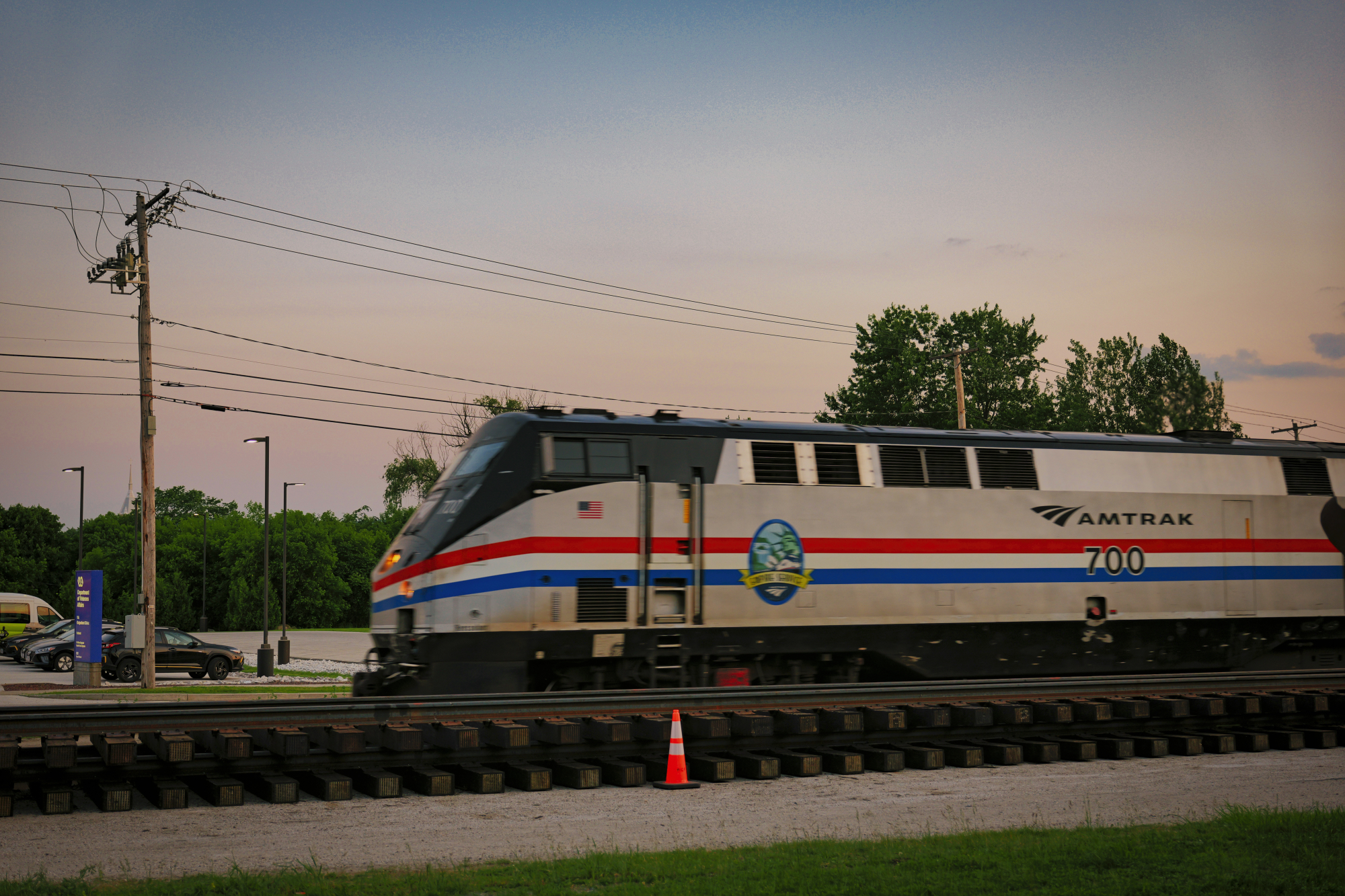
Money thinned out the way late October light does—gradually, then suddenly all at once. I found myself hopping freight trains back to New York City to sell my childhood home because I was broke enough to be practical and stubborn enough to be ashamed of it. There is nothing romantic about hanging your legs off steel before sunrise. There is just the rattle of tracks and the knowledge that you are moving toward something you once thought could never disappear.
The house on Bank Street had held every version of me—birth, childhood, exile, and return. Signing those documents felt less like selling property and more like quieting a past that still had a pulse. The brokers talked square footage, zip codes, and commissions. I thought about pencil marks on doorframes and how ghosts do not get line items in contracts.
Somewhere inside all of that, Amelia left for a month—the strain of my mother's illness carrying its own gravity. A month is nothing on paper. Thirty days. A clean unit of time. But absence inside grief multiplies. The house grew larger. The bed expanded into something unmanageable. Silence pressed against my ears until it felt deafening.
I functioned. I answered emails. I made calls. I figured things out. But the whale had already closed its mouth.
Mom's death was not loud. It was administrative. A narrowing. A final breath that did not negotiate. I have stood in rooms where endings arrived abruptly. This one arrived like paperwork. After she died, the world simply went on without her. The sky remained operational. The mail still arrived with her name on it. That offended me more than I expected.
And then there were the friends. Or the idea of them. They did not leave in a single argument. They evaporated. Messages unanswered. Invitations that dissolved before they formed. Grief makes people uneasy. It requires proximity without performance. Many prefer distance. I watched the shoreline recede and understood, finally, that some of the relationships I thought were mine had been anchored to my mother all along.
Inside the whale, sound is muffled. Time bends. You start to question whether you wandered in or were taken. There were nights I sat in Mom's house—ours, mine, history's—and felt the walls and an old blanket wrapped tight around me. The same hallway where I once tiptoed. The same pine outside the window that outlived the fire next door. Everything still standing. Everything altered.
And then came Angie. Reconnecting with her in the days after Mom died did not feel nostalgic. It felt inevitable. Nearly twenty years of shared life does not vanish because a chapter ends. It compresses. It waits. We sat in diners. We drove old roads. We talked without trying to fix anything. There was no romance to it. No rewriting. Just recognition. She had casually known the girl before the whale. She had known Dark Horse before boarding school, before exile, before translation was required. She did not need translation.
At some point—between the train tracks and the hospital corridors, between Amelia's absence and her return, between losing the house and deciding to keep Mom's—I made a choice that surprised even me.
I kept Mom's house. Not because it was practical. Not because it was easy. Because I have already been forced out of one home. Because exile once rearranged my nervous system. Because keeping this one felt like balancing an equation that had been tilted since I was sixteen. Spite can be a form of memory. Staying can be a form of correction.
The whale did not consume me. It showed me which friendships were conditional, which loves could survive distance, and which parts of me were scaffolding—not bone. It took my mother. It took illusions. It took the fantasy that permanence can be engineered if you are competent enough. But it did not take me. There were moments—small, almost invisible—when I realized I was still breathing inside it. That the dark was not erasure. That survival, again, was not the miracle. Continuity was.
Finally alive and somehow we made it through together—even if "together" looks different now. Even if together means memory, land, Amelia's steady presence, Angie's voice on the phone, the pine tree still standing outside a window that has watched everything.
|
Copyright © 1998-2026 Emily Pratt Slatin. All Rights Reserved. About | Archives | Biography | EMD Codes | Notebook | Press Kit | Pronouns.page | RSS Feed | Sitemap | YouTube Made with grit in Middletown Springs, Vermont. |